
Data Centers
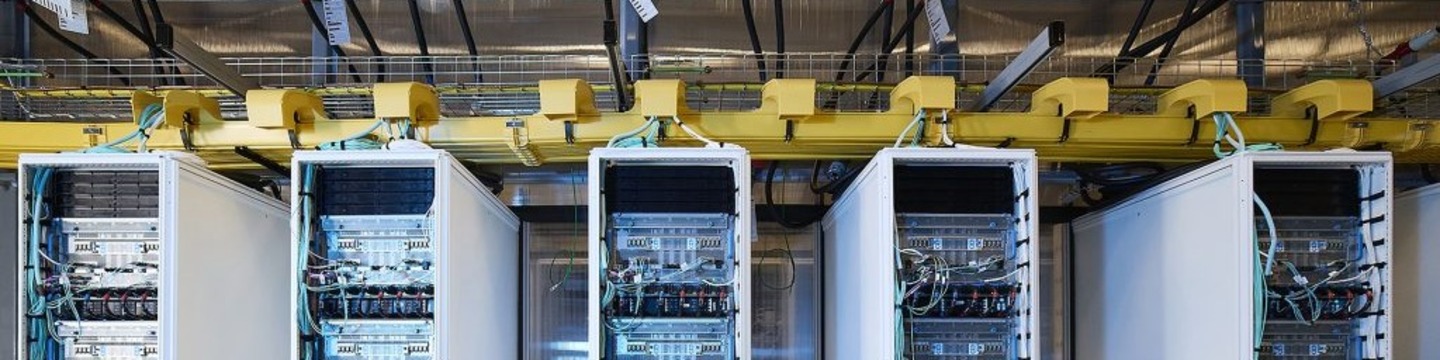
Data centers are specialized facilities that house the computing and networking systems needed to run applications and to store, process, and manage large amounts of data.
The demand to develop new data centers has been rapidly increasing amidst the Artificial Intelligence (AI) boom. As data centers become increasingly common nationwide and in the St. Louis region, concerns have arisen around their environmental, economic, and community impacts.
Large-scale data centers can require tremendous amounts of water and energy to sustain, straining local utilities and potentially impacting residents’ utility bills; create noise and heat pollution; and cause other nuisances that negatively affect surrounding neighborhoods.


Phases
Board of Aldermen considers Data Center Zoning regulations
The final Planning Commission recommendations on data centers as amended and approved June 10, 2026 meeting are located here: Updated File No. PDA-003-26-ZTX
Alderwoman Anne Schweitzer has introduced Board Bill 49 Data Center Zoning Regulations at the June 17th, 2026 Board Meeting, cosponsored by Alderwoman Alisha Sonnier and Alderwoman Shameem Clark-Hubbard. In addition, Alderwoman Schweitzer filed Board Bill 48 Data Center Environmental Impact Monitoring.
On June 30th and July 7th, 2026, the HUDZ Committee adopted amendments in Committee which are now incorporated in Board Bill 49 As Amended In Committee (BB49AAIC). The Planning Commission voted to approve all amendments to the regulations in their July 8th meeting.
The amendments in committee were as follows:
Amendment 1 sponsored by Alderman Rasheen Aldridge: Adds requirement that the Board of Aldermen raises their threshold of support for a Public Impact Agreement from a simple majority to a super majority. PASSED
Amendments 2-8 sponsored by Alderwoman Anne Schweitzer: Adds definitions of ‘Bundled’ and ‘Unbundled’ renewable energy credits to further clarify the renewable energy requirements established in this board bill; Modifies the renewable energy requirements by reducing the mandatory upon operation percentage, and further modifies the compliance pathways for 100% renewable energy; clarifies that the environmental engineer must be professionally credentialed and approved by the City of St. Louis; adds requirements for the submission of a fuel plan and screening; amends the definition of ‘Maximum Power Demand’ to include that it is measured from a single point of interconnection; expands the application requirement to include additional acceptable forms of documentation. PASSED
Amendments 9-10 sponsored by Alderwoman Anne Schweitzer: Clarifies the types of generators that require screening; clarifies that a manufacturer standard enclosure will satisfy the enclosure and screening requirements. PASSED
Amendment 11 sponsored by Alderwoman Anne Schweitzer: Clarifies the applicability of these regulations on new and existing data center facilities. PASSED
Amendments 12-16 sponsored by Alderwoman Anne Schweitzer: Amends the renewable requirements to allow for these to be met utilizing ‘unbundled’ RECs upon operation, and further clarifies the percentage of RECs allowable at year 5; clarifies the applicability and triggers for existing Data Centers in the city of St. Louis; clarifies that noise measurements submitted as part of the application process as conducted by a third party professional approved by the city; Removes a defined term "Local Renewable Energy Credits" no longer utilized within the text of the Board Bill. PASSED
Board Bill 49 was second read at the Full Board Meeting on July 10, 2026. No amendments can be offered during second reading.
The full Board of Aldermen debated BB49 on July 20th, 2026. The following amendments were proposed:
Amendments 1-2 sponsored by Alderwoman Anne Schweitzer: Updated the bill summary to reflect the bill contents; clarification on applicability of regulations. PASSED
Amendment 3: Not put forward for vote.
Amendment 4 sponsored by Alderwoman Jami Cox-Antwi: Allows an applicant to exceed the 30 percent cap only when the applicant both activates all net leasable ground-floor space with eligible active uses and commits specified community benefits through an agreement with the City as part of the conditional use permit. PASSED
Amendment 5 sponsored by Alderman Tom Oldenburg: Adds a process by which a facility can petition the Board of Public Service to waive a penalty, add an extension, or permit them to purchase additional unbundled renewable energy credits if they are unable to meet the renewable energy requirements for legitimate reasons outside of their control. PASSED
Amendment 6 sponsored by Alderwoman Jami Cox-Antwi: Amends setback requirements for educational and research institutions' data centers. PASSED
When substantial amendments are adopted, the legislation has to return to the Planning Commission before perfection and being finally passed. If the Planning Commission disapproves of the amendments, the board bill must have 10 votes to approve at the Full Board of Aldermen to be finally passed.
Events
Past events
Event date: August 12th, 2026 at 10:30 PM to August 13th, 2026 at 1:00 AM.
1520 Market Street
Event date: July 1st, 2026 from 8:30 PM to 10:00 PM.
1200 Market Street
Event date: June 30th, 2026 from 4:00 PM to 6:00 PM.
Event date: June 10th, 2026 at 10:30 PM to June 11th, 2026 at 1:00 AM.
1520 Market Street
Event date: May 18th, 2026 at 10:30 PM to May 19th, 2026 at 12:30 AM.
1200 Market Street
11 registrants
Event date: February 11th, 2026 at 11:30 PM to February 12th, 2026 at 1:30 AM.
1520 Market Street
1 registrant

Event date: October 1st, 2025 from 8:30 PM to 9:30 PM.
1200 Market Street
20 registrants