
We held a hearing on June 4 to explore establishing a redevelopment revolving loan fund: https://www.youtube.com/watch?v=dZli3bPyyLw
Thank you Mr. Ferry for advocating for your idea!
Establish a Revolving Redevelopment Loan Fund
From "Vote on Priority Ideas"
Go to the project
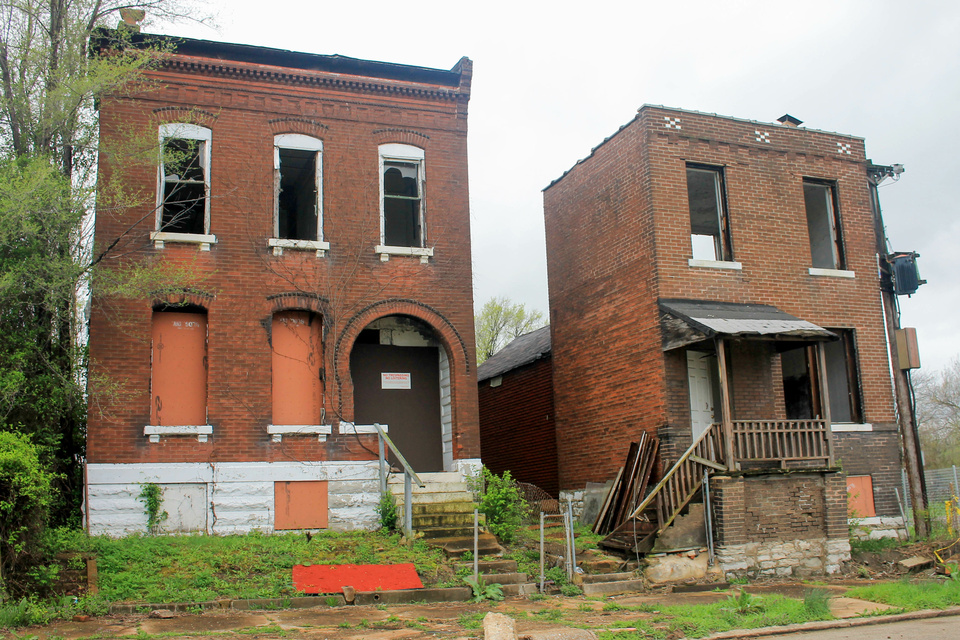
Priority: Improve City Finances & Catalyzing Downtown Reinvestment
Author/Source: Jonathan Ferry
Redevelopment projects in economically distressed areas are considered risky investments by banks because the lender needs assurances that if a developer cannot repay their debt, the lender can seize and sell the property to recover the loan. With additional collateral, developers can access larger amounts of capital than they could on their own. The City could establish a Redevelopment Loan Fund to serve as a collateral backstop to support development in disinvested areas. The Fund, if established as a separate 501(c)3, could also receive investment from private partners, including banks, large corporate sponsors, and other big St. Louis institutions such as sports teams. This could also reduce the use of tax incentives, which provides more funding for schools, libraries, and other entities that rely on property taxes for funding.
This idea could not be fully funded by the annual interest accrued from a municipal endowment fund. Ideally, this would be a joint investment with contributions from institutions including the City of St. Louis.
Funding Considerations
- Cost estimate: To be assessed
- Can this be funded from interest via a Municipal Endowment Fund? (Estimated value of $12M annually): No
- Does this require matching funds? (More than $250M) No
- Is this eligible for a tax-exempt bond? (Project benefits taxpayers and proceeds used by governmental entity) No
- Is this likely to attract philanthropic funding? Yes
- Are there other potential funding sources? Yes
City: Economic Development Sales Tax
State: None
Federal: None
Official updates
Last update: June 5, 2024
Posted on June 5, 2024
Comments(59)
Please to comment.
Most recent comments have loaded.
Profile of Jim White
Posted by:Jim White
2 years ago
The ongoing financial scandal with the SLPS makes me less trusting that the City would be able to properly manage developement funds with transparency and competent oversight.
I'm still a fan of money invested in infrastructure such as water, sewers and honest inspections.
I worry that the money will not be used as intended resulting in more blight (abandoned projects) and less money for individuals to own their own homes or businesses.
Profile of Deborah Hopkins
Posted by:Deborah Hopkins
2 years ago
I like this idea tear these houses down or sell them for development.
Profile of Mitchell Easter
Posted by:Mitchell Easter
2 years ago
Why nobody has mentioned using funds to establish a trade school to teach the arts and skills of how to rebuild, remodel, and restore these buildings into nice, high quality homes at affordable prices goes to show that most aren’t even on the right track when it comes to investing in people, communities, neighborhoods, infrastructure, and the overall future of this city that will benefit all. Person learns skill, is rewarded through pay, teaches other same skills, learned skills create entrepreneurs and businesses, stirring up interest and creating jobs/careers, becoming a self-sustaining entity of growth and prosperity. Oh, wait, did I just describe what already has been done here that built this city 50-100+ years ago? I think I did. Sometimes the answer is right here in the history books. What this city is trying to achieve is not new, novel, earth shattering, nor by any means impossible.
STL is a brick haven of wonderful buildings. Perhaps we invest in restoring it to the pearl of the Mississippi it once was architecturally AND with the skills and trades to sustain the future of it.
Profile of Brian Power
Posted by:Brian Power
2 years ago
@Mitchell Easter That’s a really good idea!
Profile of Glenn Eckert
Posted by:Glenn Eckert
2 years ago
It can easily cost $300,000 + to fix up an old neglected home. Can the recipients pay back this size if a loan? Would funds be available to contractors? If so, are there buyers for this value property?
Profile of Jonathan Ferry

Posted by:Jonathan Ferry
2 years ago
@Glenn Eckert for homes, the general idea is to follow a program similar to Detroit Home Mortgage. In that case, the Rams funds are held as a collateral reserve to entice banks to lend to home buyers in areas where mortgages are not currently being issued. So, there is no direct lending of the Rams funds, and there would have to be a buyer before any money would be at risk. In other words, there would not be any speculative building.
Profile of Glenn Eckert
Posted by:Glenn Eckert
2 years ago
@Jonathan Ferry ... good additional info . It's good to know there are some strings attached.
Profile of Barak McCormick
Posted by:Barak McCormick
2 years ago
I recommend we use a portion of the settlement to provide a Hard Money Loan service to people/small businesses who purchase LRA properties in the city. Lots of private hard money loans base their borrowing off an LTC (loan to cost) ratio which will exclude most LRA properties. If we can have a program with the LRA department or with one of its partners that bases Hard Money loans strictly off the ARV (After Return Value), this will help speed up the construction/rehab of these properties. This program could also charge the standard fees that come with Hard money loans which would actually bring in more money to the city. Also, you can protect the loan investment by including what is called a "Hold-Back Amount" where you wouldn't officially pay out to the customer until they provide receipts of work being complete. A pay on completion type of system where each milestone of the project will be paid once proven complete. These will be short term loans so once the investor refinances the property, they will most likely pay off the loan in which those funds go back into the Hard Money Loan pot.
Profile of Cristina Garmendia

Posted by:Cristina Garmendia
2 years ago
@Barak McCormick Thanks Barak, do you have any examples we should look into? Another City that has implemented such a program?
Profile of Barak McCormick
Posted by:Barak McCormick
2 years ago
@Cristina Garmendia Hi Cristina. I couldn't find any cities that have such a program as of yet. Probably do to finding the capital to fund the project. To get a better idea of how hard money loans work you can check out a site called kiavi.com. They are one of the leaders in online hard money loans as everything is processed online quickly and efficiently. The problem is, as I mentioned above, was that these companies use a LTC formula along with ARV to protect there investment. And Since LRA properties are cheap to purchase and expensive to renovate they look at it as too high risk. What I was suggesting along with a few other Hard Money lenders is to base the loans off the After Repair Value (sorry typed Return in error above). So lets say a property is worth $250k after its repaired then using the 70% rule the person can borrow up to 70% of it's ARV ($175k). I spun up a quick and dirty powerpoint if that helps. https://1drv.ms/p/c/dab0b0c68ea1a861/Edmn8WLOLtVNinr8m2SCZaMB6Ksvhzu-rfze4bPZWARZrA?e=g9wuxS
Profile of Daisy St. James

Posted by:Daisy St. James
2 years ago
@Barak McCormick , I would like to mention that for me looking to purchase the above mention properties you will have to have a degree in loan financing to apply let alone know which one will be beneficial
Profile of Barak McCormick
Posted by:Barak McCormick
2 years ago
@Daisy St. James My suggesstion was for investors only. As these will be short term investment loans. If you're confused you can google Hard Money loans and start your research from there.
Profile of Daisy St. James
Posted by:Daisy St. James
2 years ago
@Barak McCormick , see this is a start. when you said this was for investors only. I didn't know and thanks. reading is fundamental and yes I will google Hard Money loans.
Profile of Brian Power
Posted by:Brian Power
2 years ago
While I agree with Gary that these buildings, in their current condition are a problem, I do not agree with tearing them down. They are a resource, and as such should not be wasted. First, no new building is as “ Green“ as the renovation of an old building. Second, when these buildings were erected, workmanship was cheap and land was expensive. They represent a building which could not be economically built today, and which has proven durability. Third, they contribute to the character of the city which adds value because of its distinctive architecture. Renovation can make them economic to heat and cool, and their historic nature will add to their value once they are renovated. These properties can be returned to the tax base, and add affordable housing for the citizens of the city of St. Louis. This has happened in neighborhoods that were troubled on the 1970’s (the Central West End and Shaw) and these neighborhoods are now viable and valuable.
Profile of Daisy St. James
Posted by:Daisy St. James
2 years ago
@Brian Power don't forget to mention the Lafayette square and Soulard area.
Profile of GARY STEFFENS
Posted by:GARY STEFFENS
2 years ago
If you truly want to revitilice the city tear down those eye sore dangerous building and promote the rebuilding of new houses or comercial buildings. In most casas it is not cost effective to repair those buildings. At the end of the day you still have a 100 year old building that is expensive to maintain, heat and cool.
Profile of Daisy St. James
Posted by:Daisy St. James
2 years ago
@GARY STEFFENS I totally agree there are so many in north St Louis City. It would be nice if a portion of the Rams settlement fund could be used to demolish these eye sores.
Profile of Daisy St. James
Posted by:Daisy St. James
2 years ago
@GARY STEFFENS not to mention plumbing
Profile of Gary Stevenson
Posted by:Gary Stevenson
2 years ago
This sounds good in theory, but ripe for missuse and fraud. How could we trust city officials to handle this redevelopment fund with transparency? Just look at what's going on with the business grants as now.
This one is a no for me.
Profile of Deborah Hopkins
Posted by:Deborah Hopkins
2 years ago
Please let's do something with Please let's do something with these vacant building renovate or tear them down but something. It will be cold soon and they are going to be burned up. It shouldn't take so long to get things done to bring our city back it's so sad. But people need to remember these things come election time.
Profile of Daisy St. James
Posted by:Daisy St. James
2 years ago
@Deborah Hopkins you said it come election time.
Profile of martha jean williamson
Posted by:martha jean williamson
2 years ago
I have watched the City deteriate slowly. I am very frustrated because the City have too many vacant buildings and that is so embarrassing because former
residents can't believe how the City Looks... Buildings that are 50 years old need to be demolished and landscaping or new homes need to be built. I want to have a beautiful city.
Profile of Daisy St. James
Posted by:Daisy St. James
2 years ago
@martha jean williamson being a city resident (North City) it's known for it vacant lots, trashed alleys and abandon vacant building. City hall has not made an attempt to find who the building belong too. So they sit and deteriorate and became shelter for the homeless.
Share
Posted by
Profile of Board of AldermenBoard of Aldermen on January 4, 2024

Current status
under consideration